Part III
Chapter 15: The Shadow Threshold
Estimated reading time: 16 min
“One does not become enlightened by imagining figures of light, but by making the darkness conscious.”
— Carl Jung
The Dragon Speaks From the Shadow
The knights stagger in, their armor rusty and raw,
swords slick with the bile of their dogma.
My cave yawns, a maw of splintered bones—
their fathers’ skulls grinning underfoot.
They brand me beast, their voices choking on fear.
I didn’t crave their polished piety.
I hungered for their quivering gaze.
Shed your steel, you trembling fools.
Bring only your guttering torch and a festered wound.
The toll to enter my lair
is the lie you clutch about your saintly heart.
For I am the child who clawed for warmth
and tasted only iron fangs.
Now my voice is a frost giant’s bellow,
the shriek that claws your sleep,
the pulse you stifle in your pristine veins.
See me.
I am the serpent who hissed to Eve
not of shame, but of knowledge that burns.
I am Lilith, spitting on Eden’s gilded cage,
choosing the desert’s honest scream over a stolen bone.
I am Loki’s cackle as Asgard’s spires bleed ash.
I am Kali’s frenzy, her knives wet with chaos,
the raven tearing sinew from the gallows’ sway,
the maggot feasting in the corpse’s rot.
I am the gnawing in your gut
when they tell you to kneel and starve.
You cast me out—
and in the black, I gorged on your buried truths.
Fear me.
Then crawl closer.
Know me.
I am the serpent coiled in your throne’s rotten roots,
my scales grinding the World Tree’s veins to dust.
I am the shudder in the earth
hissing: all your towers will choke on their own lies.
My love is not a comfort.
It is a flaying.
Drag me the dregs of your shame,
raw and reeking.
I’ll smelt it in my gut—
and hand you back
the molten gold of your unbound soul.
The Spiral Path of the Dragon descends here into the underworld of the unacknowledged, where repressed fear, hunger, and untamed charge wait without polish.
Three forces stand at this threshold. The Shadow is the archive of what was split off to survive and now asks to be witnessed without performance. The Creator–Destroyer is the rhythm that composts what can no longer be carried and demands deliberate release. The Keeper of Eros is the steward of finite life-force, insisting that reclaimed charge remain consent-bound and non-extractive.
The threshold is custody, not self-expression. Whatever you reclaim here must be able to survive contact with ethics, body, and aftermath.
Jacob does not leave his night wrestle unmarked; the body remembers contact with forces it cannot master. Transformation costs, and whatever you lift from this underworld will ask for stewardship, not display.
The practices here are inward-facing and symbolic. If you become overwhelmed or lose clear contact with your body, stop and return attention to your surroundings.
The Shadow
Shadow Work is the first honest meeting with what your psyche had to bury. To become the Dragon, you must face the Dragon in the cave: the fear-shaped guardian of your disowned nature, standing before both your Shadow and the deeper Self you have not yet dared to embody.
Wholeness asks something harder than becoming good. It asks you to know what your image of goodness has required you to exclude: selfishness, jealousy, resentment, laziness, and the capacity for genuine harm.
We build identities to keep our contradictions and our capacity to misuse power out of view. In a real hierarchy, power-over may be held responsibly or abused through domination; Power-Under may turn claimed powerlessness into covert leverage. If you never admit what you are capable of, you never have to change. This is how the psyche protects itself from the labour of individuation.
The Architecture of Avoidance: Intent as a Shield
When the Shadow is touched, the ego reaches for its most reliable scripts to preserve the fantasy of its own goodness:
- “I’m misunderstood.”
- “They are too sensitive.”
- “That wasn’t my intention.”
This is Intent as a Shield: using stated intention to invalidate impact and avoid accountability for consequences.
Jung described the Shadow as what gets exiled through fear, shame, or conditioning: instinct, grief, desire, brilliance, and the parts of self we would rather not claim. What returns here is rarely evil. More often, it is wounded, distorted, or waiting for a form of compassion strong enough to bear the truth.
Bypass is what happens when shadow work is replaced by shadow management. The hidden material is not transformed; it simply learns better language and waits for another chance to rule the moment.
Dark, Gray, and Golden Shadows
The Shadow is not one thing. Understanding its flavours helps us meet it more skilfully:
- Dark Shadow — Deeply repressed aspects, often born of trauma or primal fear. Volatile when ignored, vital when brought into conscious relationship.
- Gray Shadow — Numbness, inherited conditioning, avoidance, and adaptive flatness that once protected you and can soften with awareness.
- Golden Shadow — Disowned brilliance: talents, virtues, and strengths we admire in others but struggle to claim.
Each form carries both risk and potential. The personal Shadow can also touch collective patterning. Jung’s Collective Unconscious names a shared archetypal layer; families, generations, groups, and cultures add other transmissions that can reappear in the individual.
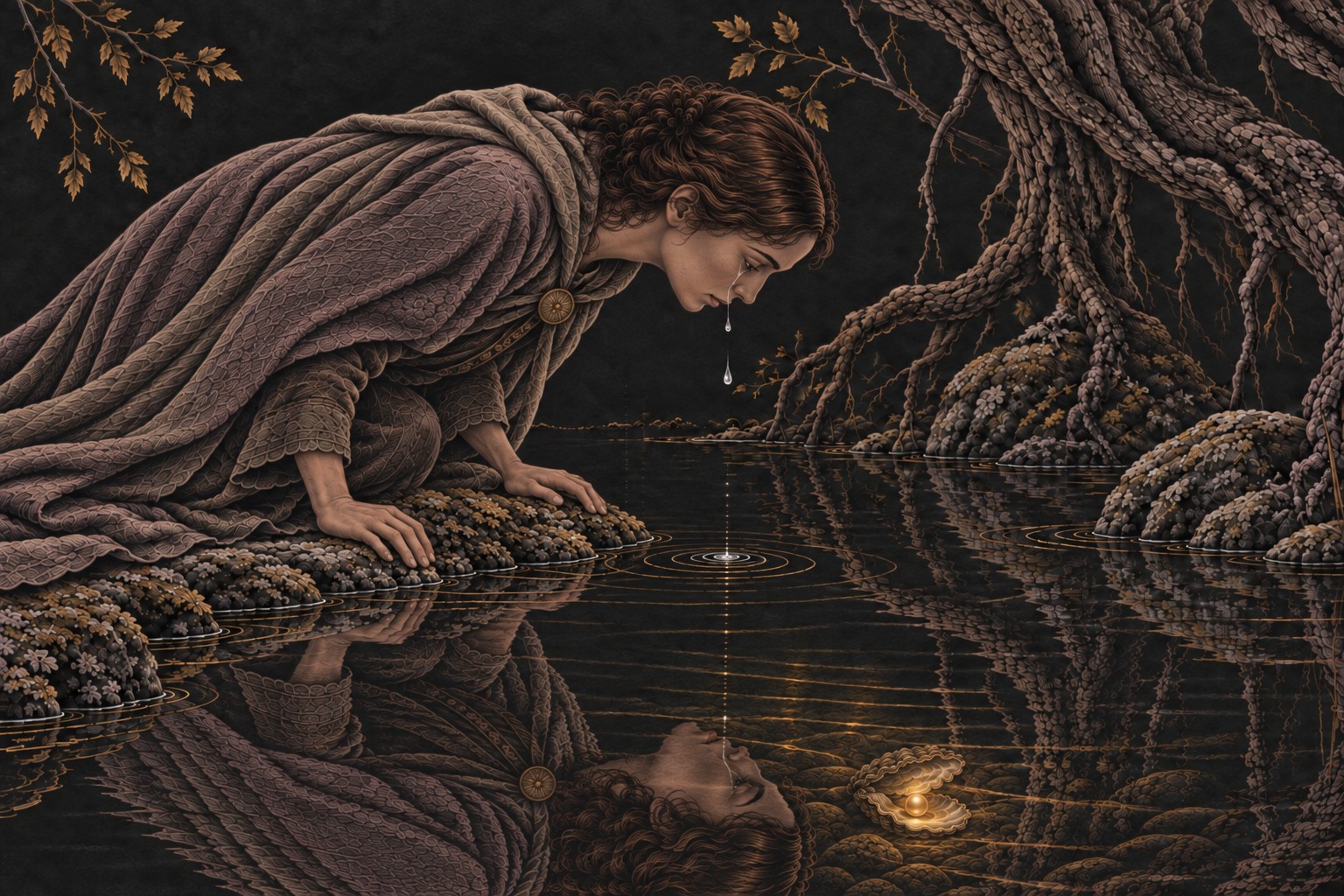
Light and Shadow in Shadow Work
Integration does not turn Shadow into Light or erase where the material came from. It changes the relationship: what was disowned can remain recognizable as Shadow material without governing from exile.
- Held in conscious relationship — Reclaimed charge fuels authenticity, creativity, presence, and discernment.
- Acting without custody — Disowned charge drives projection, self-sabotage, distorted perception, and reenacted pain.
Grief is often the threshold key here: the grief of loss, unlived dreams, or self-abandonment. Shadow work frequently passes through that doorway, because what was exiled usually cannot return without mourning what it cost to leave it behind.
Clean Boundaries: The Middle Path
In the context of shadow work, Clean Boundaries are the firm internal lines you draw between validating a feeling and excusing a behaviour.
When we encounter our disowned nature—the envy, resentment, or capacity for harm—it is easy to fall into two traps: suppression (shame) or acting out (possession). This boundary offers a middle path.
Compassion Without Permission. You can meet the Shadow with empathy without letting it cause wreckage. “I want to make a snide comment about my friend’s success” can become: “I feel overlooked and hurt. The feeling is allowed. The comment is not. We do not hurt people because we are hurting.”
Internal Differentiation. This boundary distinguishes the Adult Self from the Shadow. Without it, the urge can possess the whole field. It lets you say, “Envy is moving through me,” rather than “I am an envious person.” That distance lets you observe the pattern without letting it dictate your identity or actions.
Protection from Leaking. When boundaries are porous, the Shadow leaks onto others as passive-aggressiveness, projection, or subtle manipulation. It changes the room through tone and pressure before you have named what is happening. Ownership says: “This anger is mine to hold. I will not make my partner carry it before I have met it cleanly.”
These limits also govern how you treat yourself. They separate constructive guilt, which leads to change, from toxic shame, which leads to more shadow behaviour. They say: “I will hold myself accountable for the harm I caused, but I will not allow my inner critic to abuse me.” Self-compassion is what restores enough capacity to face the harm and repair it.
The movement from possession to ownership is simple and severe: acknowledge the urge, then choose what you will actually stand behind. Own the feeling as yours without deciding what happened from the feeling alone. Test its story against observable behaviour, power, context, and consequence. Replace “I’m a monster for feeling this way” with “This part of me is wounded, but I am still the one in charge.” Speak your needs directly rather than turning the Shadow into a weapon.
Tracing a Trigger
- Identify a recent emotional trigger.
- Notice the sensations and thoughts it stirred.
- Ask: What does this moment remind me of?
- Identify the part of you activated here.
- Witness that part with compassion.
- Offer it what it needs, internally.
If the intensity stays live after you finish, don’t rush back to activity. Move, hydrate, and orient until it settles.
Dialogue With the Shadow
In a quiet space, ask:
“Shadow, what do you want me to understand?”
“What are you protecting me from?”
Listen without judgement. As more of the Shadow becomes known, the need to perform a clean version of yourself weakens.
The Dragon’s way is fierce compassion, radical honesty, and unwavering accountability. This is interior custody: reclaiming charge so it can move under conscious, ethical stewardship.
The Shadow does not ask for annihilation. It asks for witness strong enough to survive the truth and return with more of yourself answerable to the day.
The Creator–Destroyer
Integrating the Shadow is the initiation within. Reclaimed charge takes form in the Creator–Destroyer, a current of deliberate dissolution and conscious creation. The question is simple and severe: Will you shape it, or will it shape you?
Picture the paradox before you: one hand cradling the seed of a new world, the other carrying the ember that will burn the old away. This archetype asks:
“What will you dismantle? What will you create? And will you do it with integrity?”
To cling to what no longer serves is to stagnate. To unleash destruction without discernment is to harm. The Dragon teaches the middle way: fire as both forge and purifier. Every true creation ends something; every true ending makes room for creation.
Will you carry this fire like a torch in panic, or work it like a smith at the forge? One burns blindly; the other accepts heat, consequence, and shape.
Symbolic Destruction vs. External Harm
On this Path, “destruction” is symbolic: dismantling inner beliefs, habits, identities, and scripts that no longer serve. It never licenses harm—to yourself or anyone else—and it never exempts you from accountability.
Symbolic destruction is the courageous inner work of:
- Dismantling false beliefs.
- Releasing outdated identities.
- Dissolving mental structures that have hardened around fear.
- Letting go of inherited shame or fear.
This is inner demolition as preparation for conscious creation.
Light and Shadow in the Creator–Destroyer
Witness how this force expresses through your choices:
Here, Shadow names the Creator–Destroyer’s distorted expression, not the whole archive of disowned material.
- Light expression — Acts with courage, clears internal space for growth, balances creation and release, builds from conscious intention.
- Shadow expression — Sabotages impulsively, externalizes destructive urges, resists necessary change, collapses into extremes.
In lived form, the distortion is often ordinary: the dead project hoarded for years, or the good thing scorched because honest change felt slower than fire.
Transformation without ethics becomes wreckage. Ethics without transformation becomes a polished cage.
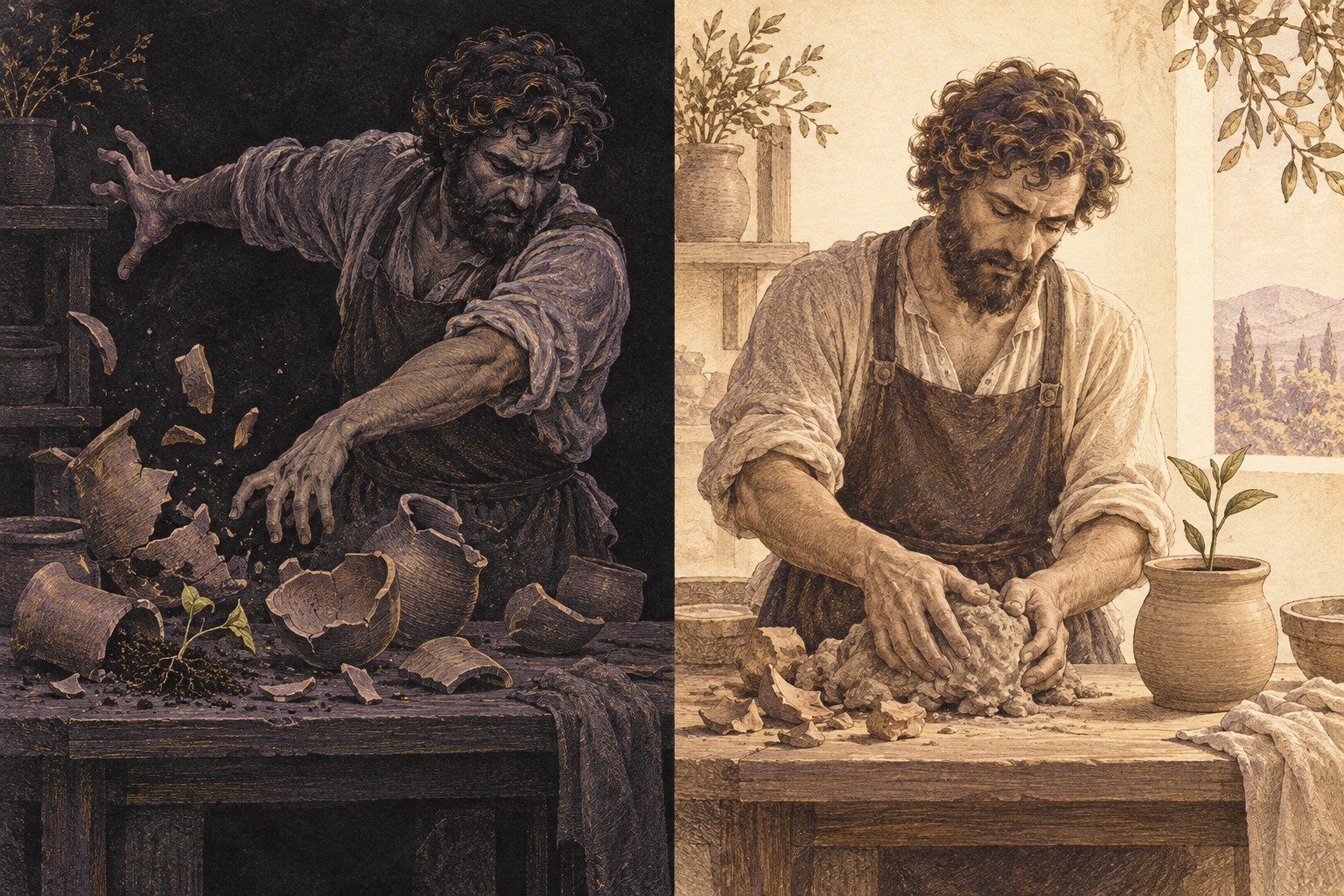
Wielding the Flame
Treat this as inner work in service of change.
- Write down one thing — a belief, a pattern, an identity — you are ready to release.
- Hold it in your awareness.
- When ready, burn the paper in a fireproof container (or tear it and dispose of it responsibly). Let the flame mark the release.
- As it turns to ash, ask: What will I create in this space?
- Let the answer emerge not as an abstraction, but as a vow you can speak to fire and shadow alike.
Meeting the Creator–Destroyer means staying with impermanence, allowing endings to become beginnings without losing yourself in either.
This small fire ritual borrows no Tantric rite and claims no lineage authority. Its correspondence with Tantric traditions is limited to one question: can you stay with feeling without fleeing, love without dissolving your own edge, and meet reality without collapsing under it? Held with consent and a clear return to the body, the practice can loosen defences and inherited identities.
Transformation here is not collapse for its own sake. The Destroyer clears what has gone false; the Creator makes room for what can live more honestly in the body. The Ouroboros renews itself through the shedding of what can no longer hold truth.
The Keeper of Eros
From the charged meeting of Shadow and power, another archetype emerges to steward what has been reclaimed.
In the Path of the Dragon, Eros is not indulgence. It is currency.
Eros is also one of the body’s clearest languages of aliveness after shame, false purity, or numbness.
In the mythic register, Eros is kosmogonic (world-birthing): the generative current that draws awareness beyond the ego’s managed territory and into encounter with what it did not plan and cannot control. Logic can clarify a life, but it does not ripen consciousness alone. Awareness matures through contact with otherness: a person, an inner figure, a creative work, the numinous.
That is why “currency” matters here. It names the Law of Cost: finitude and consequence, not purchase, entitlement, or scorekeeping. Life-force is finite, and finitude makes pleasure more sacred, not less: each pulse of aliveness asks to be met with care. It leaves real traces in bodies, bonds, and time. Here, this reclamation stays internal and symbolic. Your “No” learns to become dependable inside you; outward Eros work belongs only in a separate Living-Consent container, with clear pacing, aftercare, and the right to stop.
Eros animates bodies, bonds, art, loyalty, creation, and sacrifice. What you reclaim was shaped by what it cost to exile it. Once it moves again, the question becomes how it will be stewarded.
The Keeper is the custodian of this force—the guardian of the boundary between repression and dissolution. It protects the encounter itself.
When Eros is denied, its pressure can seek distorted outlets: compulsion, control, possession, or using another life as fuel. These patterns have many causes; the archetypal reading does not excuse the choices that turn pressure into harm. When Eros is pursued without stewardship, it can collapse into extraction: pleasure without meaning, intimacy without memory, bodies without reverence.
The Keeper does not tame Eros; it gives the fire a vessel.
The Dragon does not shame desire. It demands adulthood.
In this frame, virtue is price integrity: honest regard for cost, capacity, and aftermath:
- You do not counterfeit intimacy.
- You do not offer desire you cannot stand behind.
- You do not take devotion you will not steward.
- You do not confuse availability with generosity.
The Keeper operates through four faces. They are tools, not thrones: functions to visit and choose as needed. When a face hardens into identity, distortion follows.
The Mirror of Reclamation
In its most charged imaginal form, the Mirror appears as the Holy Whore: surgery, not a lifestyle. It symbolically reclaims sovereign Eros by meeting shamed or forbidden otherness inside the self, so repression does not keep governing from below. It acts as a mirror to collective denial and a breaker of false innocence. Its trap is obvious: mistake the surgery for a throne, and the fire turns destructive.The Flame Liberator
This is the spark: ignition that reawakens vitality without sending it outward too fast. It may appear as creative flow, somatic reinhabitation, or rage reclaimed as fuel. Here Eros returns to the body before it becomes relational, so aliveness can be felt without making another person carry it.The Boundary Holder
This is the dam: conservation in service of protection. It is the clear No that makes real encounter possible because the way out remains open. It closes gates, withdraws access, and lets desire die when it cannot be stewarded. Desire without boundary can become predation; boundary without desire can become repression. The Keeper holds both.The Consecrator of Union
This is the bond: integration that allows Eros to bind rather than fragment. It honours that real meeting leaves residue, changes nervous systems, and creates memory. What is consecrated cannot be undone casually; it must be tended, repaired, or cleanly released.
There is also a modesty of Eros that has nothing to do with shame.
It is not the shrinking of the body, the denial of desire, or obedience to another person’s fear. It is reverent reserve: the knowledge that erotic charge is real, consequential, and alive. The gaze can touch and radiance can affect the field, but neither creates invitation, obligation, or consent by itself. Responsibility begins when you invite, participate in, or knowingly cultivate an engagement. It does not begin merely because desire awakened in someone else.
The Keeper therefore teaches restraint as stewardship. Let the fire live first in your own body. Let it become warmth, clarity, creativity, devotion, and presence before you offer it outward. Hold enough boundary that your yes remains clean. Hold enough reverence that desire does not become demand. Hold enough humility to answer for the engagement you helped create, whether through care, boundary, or a clean ending.
Reserve is not shame. Radiance is not permission. Desire is not command.
The question is not whether Eros should live. It must live. The question is whether wisdom holds the flame, or whether the flame has seized the hand that carries it.
Together, these four faces keep Eros alive and answerable. When the Keeper abandons its post, Eros distorts into shadow.
The wound here is older than any one story: shame and repression fracture embodiment. Reclamation returns aliveness to the body as something lived rather than displayed.
The cultural wound has distinct histories. In Western Christian tradition, Mary Magdalene was often conflated with other Gospel figures and folded into sexual shame. Inanna/Ishtar—the Sumerian and Akkadian forms of one complex Mesopotamian deity—was often narrowed in later reception to the erotic, obscuring associations with war, justice, power, abundance, and more. These histories do not share one genealogy.
Here they meet as symbolic correspondence: embodied Eros narrowed, shamed, or severed from sanctity. The loss is felt in the body: pleasure becomes suspect, movement guarded, desire hidden before it learns to choose. The reclamation named here answers that severing inwardly.
Distortions Around Eros
Eros can become entangled in several distortions:
- Repression — Silencing desire; disconnecting from aliveness.
- Projection — Criticizing or envying embodiment in others.
- Manipulation — Using Eros for control or validation.
- Inflation / Compulsion — Chasing sensation without meaning or presence.
- Self-Objectification — Seeing your body as an object, not a sacred vessel.
- Shame — Feeling unworthy of pleasure or vitality.
The Light of Embodied Eros
When reclaimed ethically, Sacred Eros becomes:
- Embodied repair — Meeting shame in the body until aliveness can return without disguise.
- Creative fire — Giving life-force shape through art, movement, devotion, and work that can carry heat.
- Consecration — Letting spirit and flesh meet.
Sacred Eros here is spirit made answerable in the body. Reclaimed this way, desire becomes a more trustworthy force: able to bless, create, and bond without turning another life into fuel.
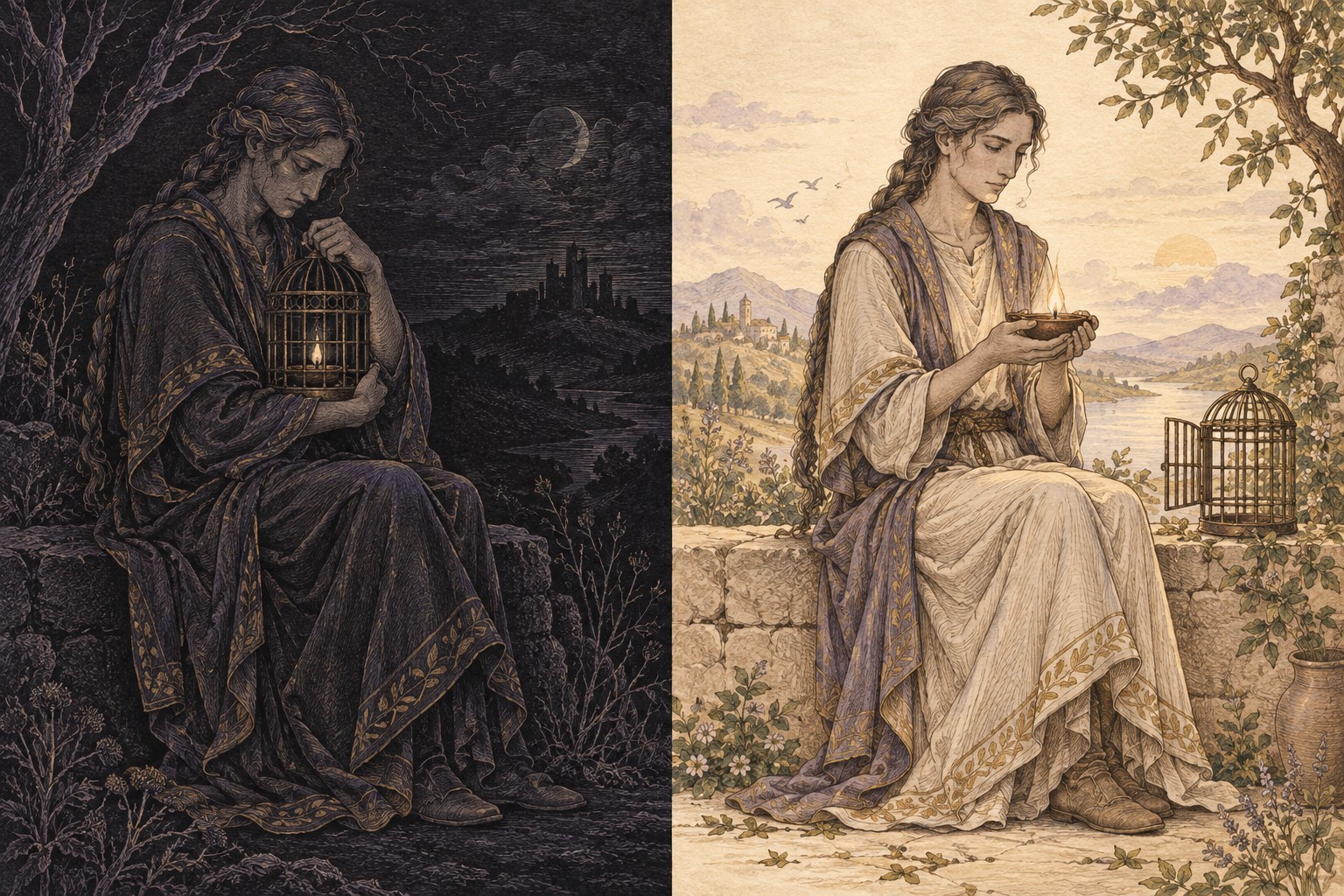
Ritual of Reclamation
Move only as far as your body can stay present. Keep Eros expression tethered to self-consent, respect, and non-harm.
This practice engages the Flame Liberator face: ignition without performance.
- Move in a way that feels good, without performance or audience.
- Let your body speak in gesture and breath.
- Feel the joy of motion, not as an image for others, but as a lived truth within yourself.
- Whisper: “I honour my life-force. I am whole in my embodiment.”
The Keeper on the Dragon’s Path holds Sacred Eros as living fire—meant to illuminate and heal what shame once shadowed.
Let this reverent current become something the body can metabolize, not just something the mind can admire.
Shadow, Power, and Liberation
The gate does not close behind you. It returns in smaller forms: appetite, conflict, the instant before old power reaches for its old shape.
There, discernment chooses what to burn and what to build. Boundaries protect self and others from harm; consent honours agency. Deliberate integration practice selects what deserves reinforcement; without that choice, repetition can make distortion structural.
The sovereignty forged here is not an isolated state. It proves itself in relationship, where reclaimed fire must survive contact without becoming harm.
Let the fire be yours to steward.