Part III
Chapter 17: Archetypes of Action
Estimated reading time: 17 min
“What you do makes a difference, and you have to decide what kind of difference you want to make.”
— Jane Goodall
The Foundational Relational Matrix—the Parent-Child-Sibling survival triad—shapes how we bond; the Archetypes of Action shape how we meet the world: how we build, break, protect, and heal.
They carry will and vision through the psyche and the Entangled Firmament.
Their signatures have shaped stories, societies, and revolutions. Carried well, they move through a regulated body and remain answerable to clear ethics.
You are not one of these archetypes. You are the entire stage upon which all of these actors play.
Seven currents of action move through this stage: Warrior, Healer, Rebel, Sage, Trickster, Fool, Magician. Each carries its own motive: protection, restoration, liberation, clarity, disruption, openness, transformation.
Within each portrait, Shadow names the distorted expression of a current, not the whole archive of disowned material. An “integrated Warrior,” Healer, or other figure names a mature current coordinated within the whole and answerable to reality and life; it never makes the current an identity.
Some are close neighbours but differ in method. The Warrior uses direct force, while the Magician shifts patterns subtly. The Rebel confronts head-on, fierce and principled; the Trickster tilts perception from within, playfully disruptive and often outside neat moral categories. The Rebel wants to burn the throne; the Trickster wants to loosen its spell from within.
The Sage builds the clearest map it can. The Trickster breaks the spell when the map hardens. The Fool remains in the opening without rushing to replace it. The Magician gives what emerges a form. Distinctions matter; method shapes impact.
You have seen these signatures before: the firm boundary, the tending hand, the principled refusal, the clarifying question, the sideways joke that breaks a spell, the honest I do not know, the pattern-shift no one saw coming.
History carries them too: Joan of Arc in the Warrior’s vow, Socrates in the Sage’s costly questions, Charlie Chaplin turning Trickster against power, and Gutenberg at the press, setting metal type so knowledge could move through more hands.
Recognition begins the work; integrity is proven in action.
The Warrior
Archetype
Something changes in breath and belly when the sacred must be protected. The Warrior awakens as embodied clarity: sensation before story.
This is the fire that moves through bone and muscle when a boundary is drawn not in fear, but in love. In the Dragon’s body, the Warrior’s presence is courage in motion, anchored in vow.
Here, power means the capacity to create effect. The Warrior expresses power as the protection of value: firm boundaries, proportional force, and service without domination.
Pattern
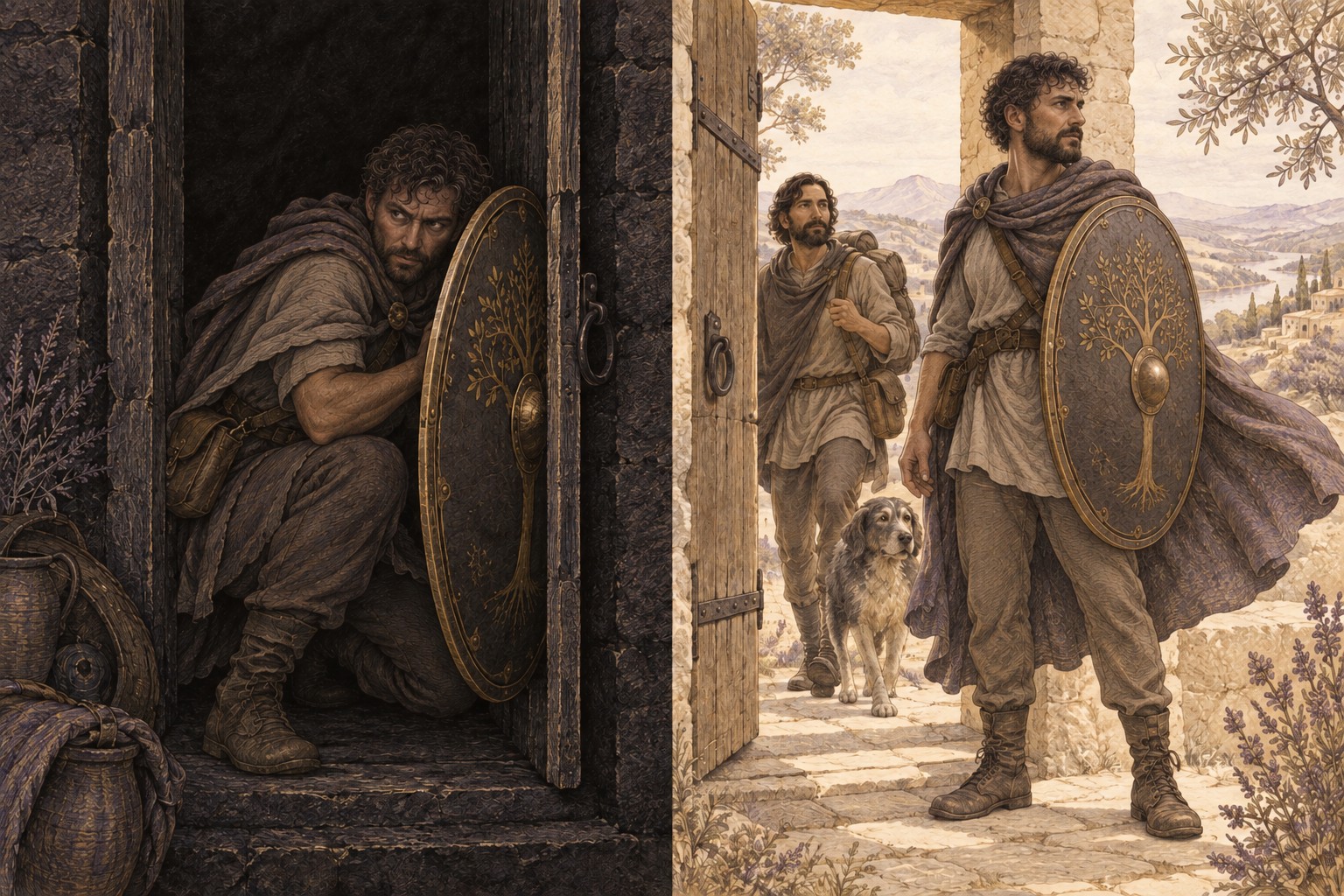
The Warrior often arrives first as pressure becoming direction. Attention narrows. The body firms. Something in you knows that passivity would become betrayal.
This is why boundaries matter so much here. “Stop yelling” can be a plain request. Coercion tries to force another’s compliance; a boundary names the limit of one’s own participation: “If you yell, I will leave the room.” Mutual agreements are different; they are limits held together, not commands imposed from one side.
A boundary is simply the perimeter of a value. A clear “No” does not require endless defence, though context may call for explanation, negotiation, or a direct exit.
A familiar jab lands at the table, and the body surges toward either explosion or collapse. The Warrior finds the feet, keeps the voice level, and says, “Stop. Don’t speak to me like that. If it continues, I’m leaving.” The boundary is not punishment. It is protection.
Light
In light, the Warrior stands firm against harm, upholds limits, and moves directly toward what matters. It can hold a boundary with someone it loves, stay present through a hard wave in the body, decline false healing that empties the work of depth, and speak a necessary truth even when a group would rather stay comfortable.
Shadow
In shadow, the Warrior hardens into tyrant, destroyer, or wounded fighter. Doctrine becomes a weapon. Intimate knowledge is used to wound. Every passing slight becomes another battle. Discipline turns into a shield against the body’s needs, and exhaustion gets used to control the room.
The turn is precise: force stops serving value and starts serving injury, ego, or the need to win.
Gift
The Warrior’s gift is defended calm. Power is measured; battles are chosen, and restraint belongs to the gift. A trustworthy Warrior can feel the strike and still choose proportion.
When discipline meets flame, the Warrior’s edge tempers rather than scorches. The integrated Warrior stays grounded under provocation. This composure is not softness. The calm others meet is often forged where chaos pressed hardest and something deeper refused to yield. Its power is service, never spectacle.
Such protection begins in devotion to what must endure.
Reflection
When the Warrior rises, ask what is worth protecting and what the smallest proportional act would be. Some systems demand more explanation only to exhaust you into compliance; the Warrior can choose silence, a brief bounded reply, or the next honest action. If that choice brings a cost, let the Warrior protect integrity over self-image.
The Healer
Archetype
In the heart, the Dragon breathes softly; the Healer stirs: the pulse that listens beneath pain and tends the fracture without flinching.
In the Dragon’s being, the Healer is not merely a soother. The Healer sees clearly, tends gently, and trusts the slow unfolding of integration.
Healing here is alchemy through contact with suffering, not escape from it.
Pattern
The Healer often arrives as sensitivity to rupture. Attention goes to the wound, the break, the part of the room that hurts. Sometimes that movement is beautiful. Sometimes it is the old rescue reflex wearing compassion’s face.
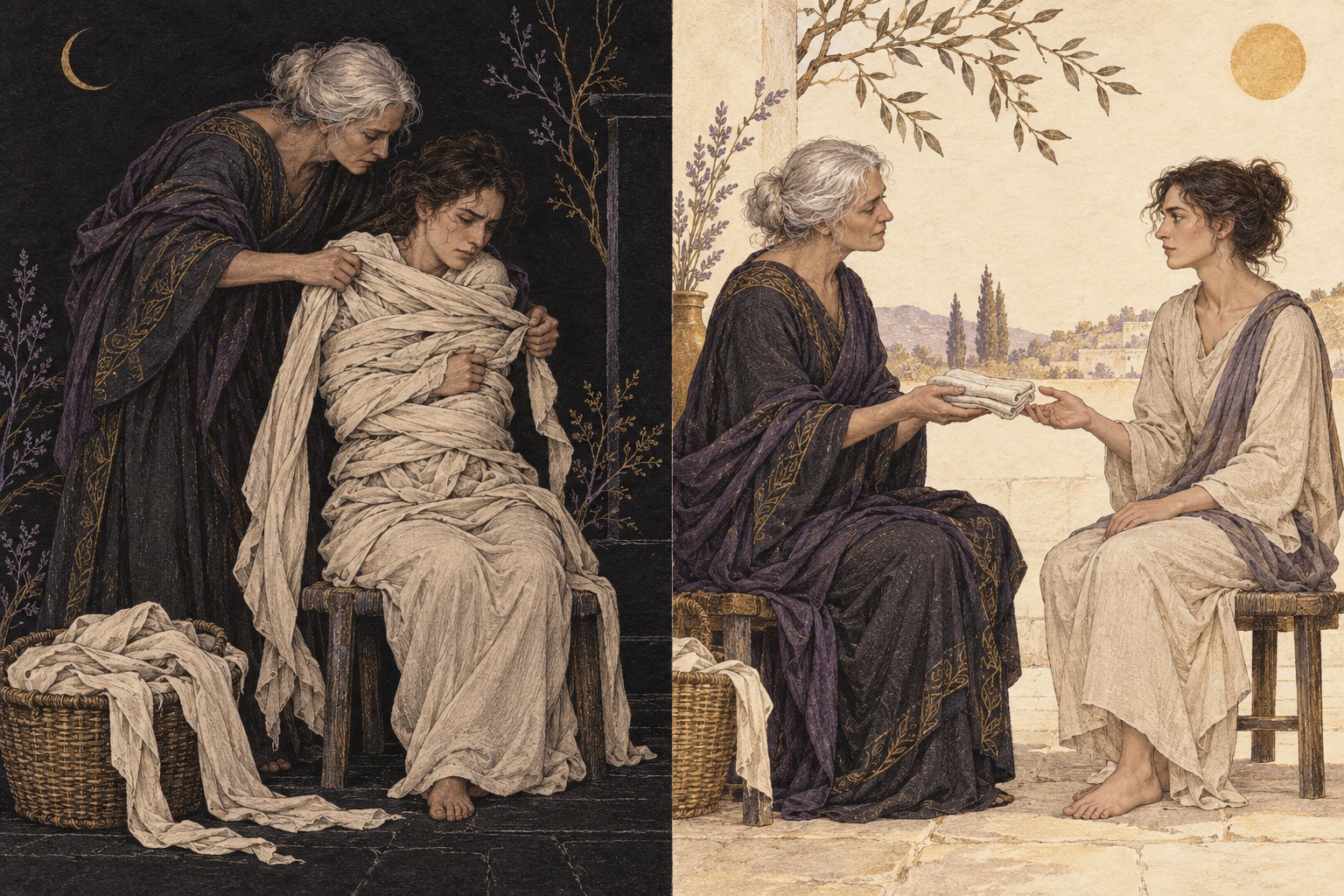
A friend reaches out late at night, spiralling, and the Healer feels the pull to become the only thing holding them up. Instead of trying to become everything at once, they breathe, ask what is needed, and offer a clear limit: “Do you want me to listen, or help you think? I can stay with you for a few minutes now, and return tomorrow when I have more room.” Care stays real. Boundaries keep it honest.
Light
In light, the Healer restores connection without erasing agency. It can hold grief without rushing it, welcome a fragment home instead of cutting it out, offer presence born of its own wounds, and support deeply while honouring another person’s path.
Shadow
In shadow, the Healer slips into martyr, rescuer, or saviour. Enmeshment starts calling itself intimacy. Help arrives uninvited. Another person’s pain becomes a way to avoid one’s own. Platitudes replace contact, and care becomes one more route to control.
The failure is intimate: the need to heal outruns the willingness to witness.
Gift
The Healer’s gift is witness without capture. Dragon’s Fire does not burn away pain. Freed from martyrdom and the need to save, the Healer can stay near suffering without grabbing for control.
Healing is a bridge, not an identity: it returns life to motion rather than keeping the wound at the center.
Reflection
When the urge to help rises, ask where you are fixing instead of witnessing, and whether you have room to give what is needed. The right measure is simple: does your care leave more life and agency in the other person, or less?
The Rebel
Archetype
Sometimes the Serpent’s heat meets a cage it cannot accept. Integrated by the Dragon, that heat becomes the Rebel: a catalytic force clearing space for what wants to emerge.
This is the snarl that rises when a lie demands your silence, when a pattern, inner or outer, asks you to betray what you know. Here, the Rebel is a disciplined disruptor.
It is rebellion in devotion to what longs to be free.
Pattern
A council is ready to approve a plan that will reshape a neighbourhood, though the people who live there have not been heard. The heat wants to scorch the air. The Rebel slows the breath and says, “No. Hear them first, or do not pass this.” The refusal protects participation without turning opposition into spectacle.
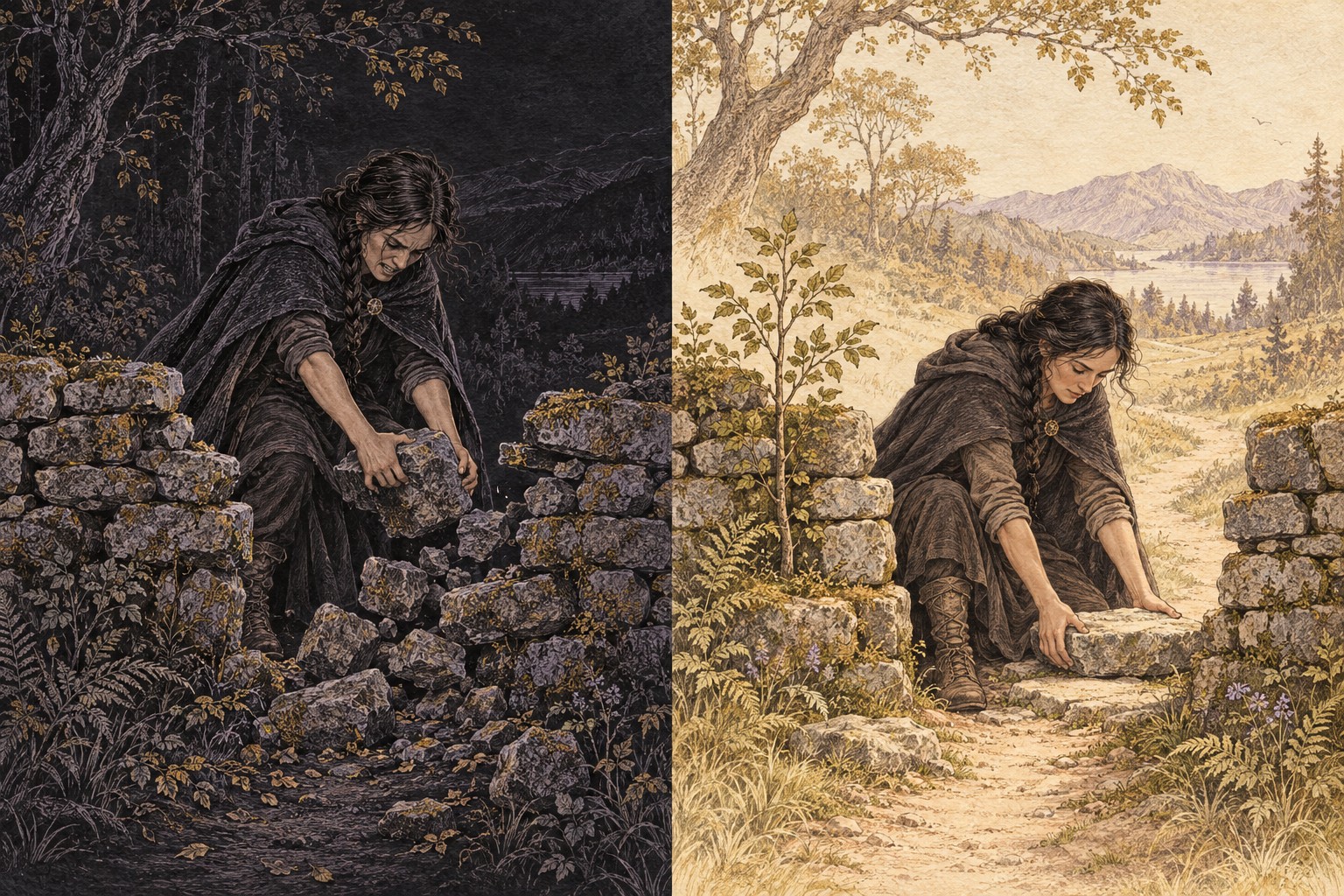
In medieval Icelandic law and saga, skóggangur names full outlawry: loss of legal and social protection, its forest-going image born from danger rather than romance. The archetypal Rebel borrows only the forest-walker image. It leaves the safety of village consensus because the village has become too small to hold the truth.
Light
In light, the Rebel embodies sacred defiance. It breaks cycles, speaks truth where power would prefer silence, and builds the alternative it longs for. It refuses complicity without turning opposition into an identity.
Shadow
In shadow, the Rebel collapses into nihilist, self-saboteur, or perpetual outsider. It rejects all structure, ruins good things to feed chaos, or turns critique into a permanent shelter from practice. Opposition becomes reflex. Fire loses its vision.
The shadow turn is simple: refusal forgets what it is in service of.
Gift
The Rebel’s gift is freedom that can build. Once reflexive opposition and the need for an enemy have been metabolized, its fire no longer depends on something to fight. It can leave a dead form, gather allies, and create a viable alternative.
The integrated Rebel becomes a threshold-keeper between what is dying and what must emerge. Its defiance clears the ground; its devotion gives the next form roots.
Reflection
When the Rebel rises, ask what injustice or limit is actually being confronted and what your action would help build after the burn. Would Trickster or Sage methods serve the truth with more precision?
The Sage
Archetype
After the smoke clears and the Dragon settles into stillness, the Sage emerges: the cool eye at the center of the storm.
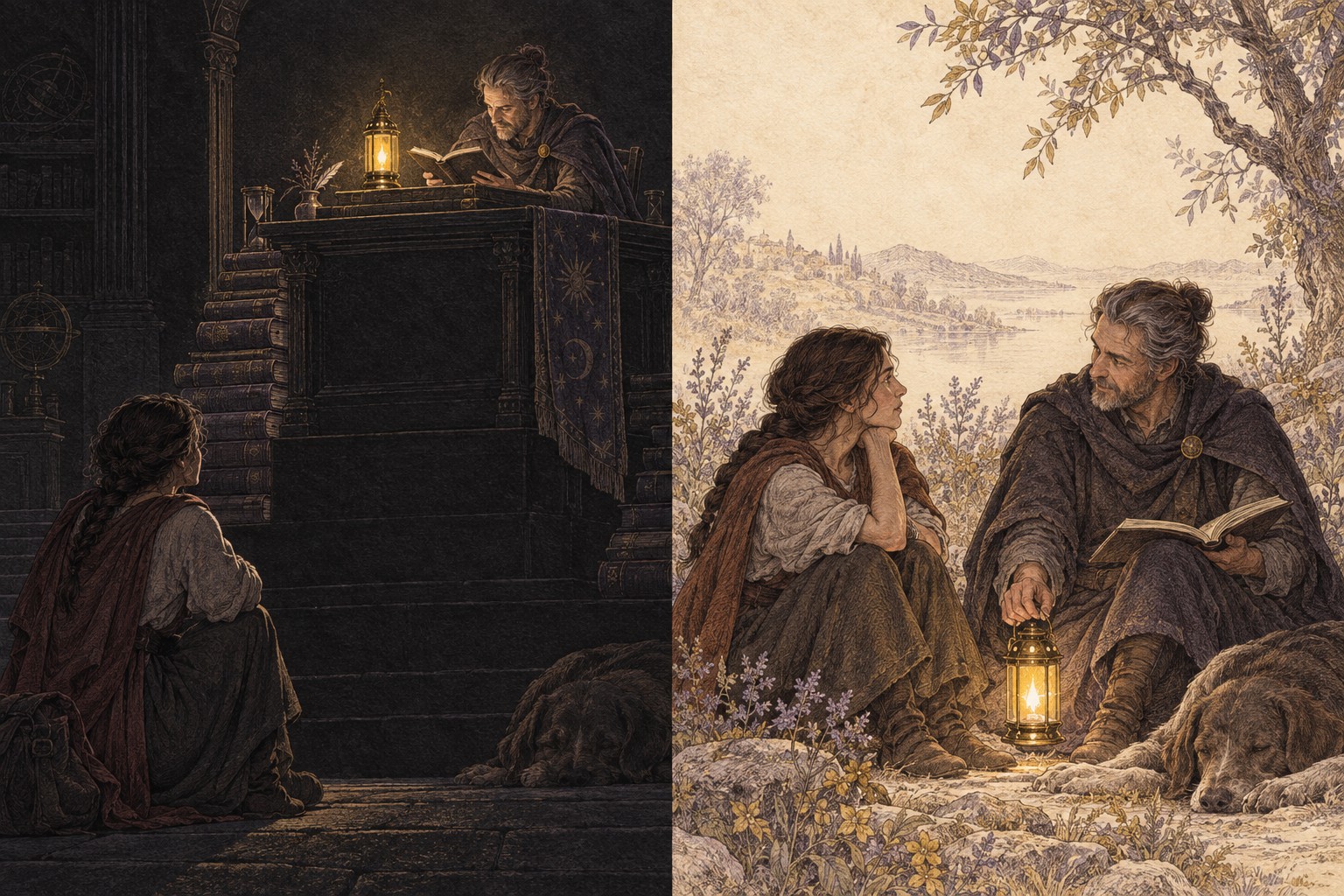
It is the presence that listens before speaking and sees before judging. In the Dragon’s body, the Sage is a seer who weds insight to action. Its wisdom is a torch carried through the shadowed corridors of truth.
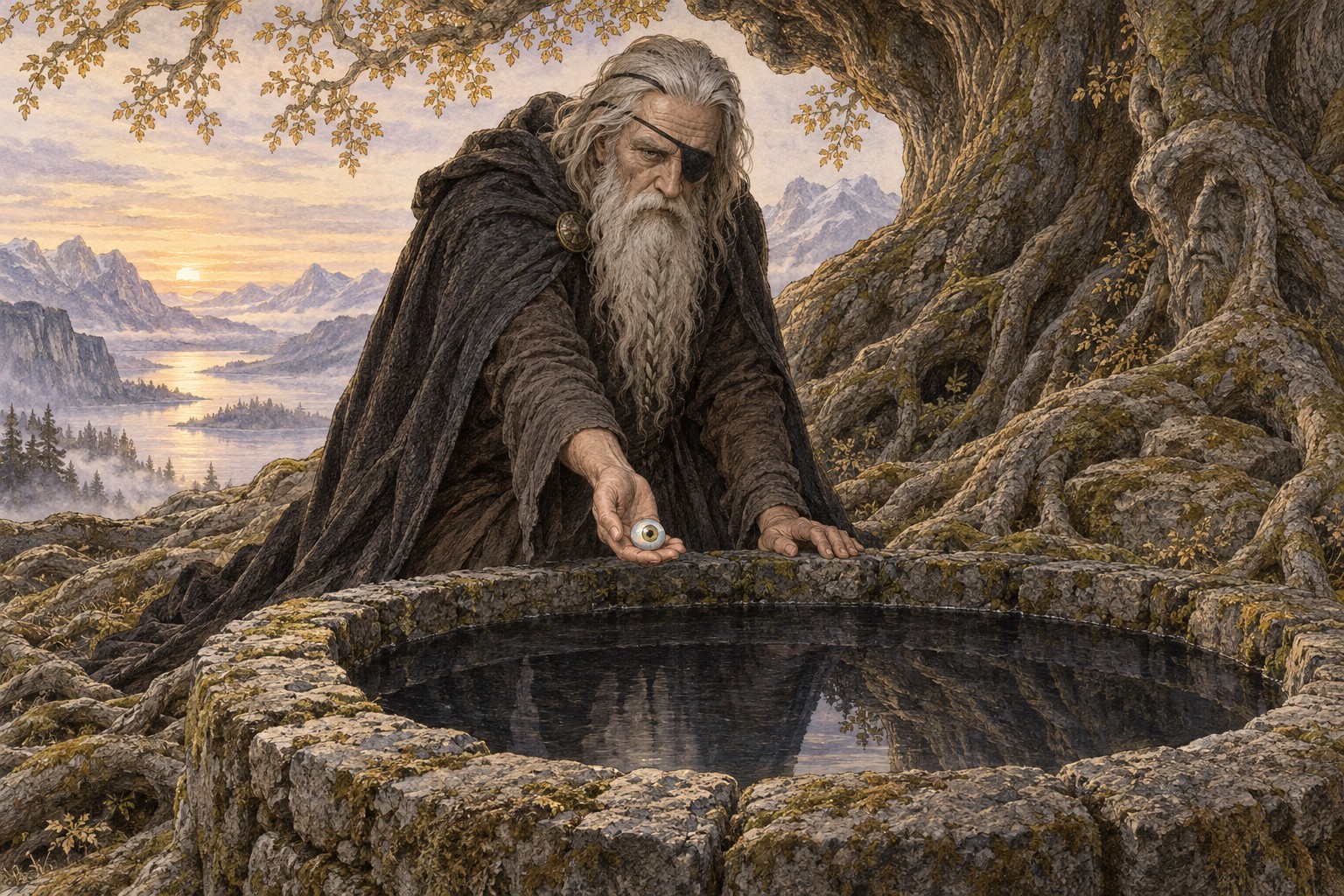
In Norse myth, Odin did not gain wisdom through meditation alone. He pledged an eye at Mímir’s Well for a drink from its wisdom.
This is the price of the Sage. Clarity is not free. To see the web’s beauty and suffering more honestly is to surrender denial: the comforting story that you can look away and remain untouched, or know without consequence.
The Serene Center does not make this painless. It helps you stay with what you see. You do not lose your right to pace your gaze. But once you see, pretending becomes a choice.
Pattern
The Sage often arrives as distance becoming discernment. The mind stops lunging. Perception widens. What first looked like certainty begins to show its seams.
The room is tired; someone trembles after saying the hard thing, and the Sage feels the pull to retreat into advice. Instead, it notices the feet, lets breath widen the ribs, and asks one precise question: “What do you need before deciding the next step?” Wisdom makes space; deciding for another person closes it.
Light
In light, the Sage offers maps rather than labels. It can observe a trigger without rushing to conclude, hold paradox without panic, sharpen a question instead of performing certainty, weave science with felt sense, and treat every truth as a pointer rather than a throne.
The healthy Sage lets understanding deepen contact rather than replace it.
Shadow
In shadow, the Sage hardens into detached judge, rigid dogmatist, hoarder of knowledge, or disembodied intellect. Jargon becomes a shelter from feeling. Explanation becomes a way to avoid change. Knowledge turns into armor, used to elevate and distance rather than to connect and empower.
The break is subtle: seeing begins to serve superiority.
Gift
The Sage’s gift emerges when the need to stand above others falls away. Dragon’s Fire becomes a lamp held low: clarity that helps another person see without deciding where they must go.
Reflection
When the Sage rises, begin with a brief outward pause: stop, let the environment reach you, and notice one thing before the mind explains it. Then ask whether your knowing connects or controls.
The Trickster
Archetype
There are times the Dragon smirks through smoke and dances on the rim of paradox. Then the Trickster slips in sideways, grin first, where certainty forgot to lock the door.
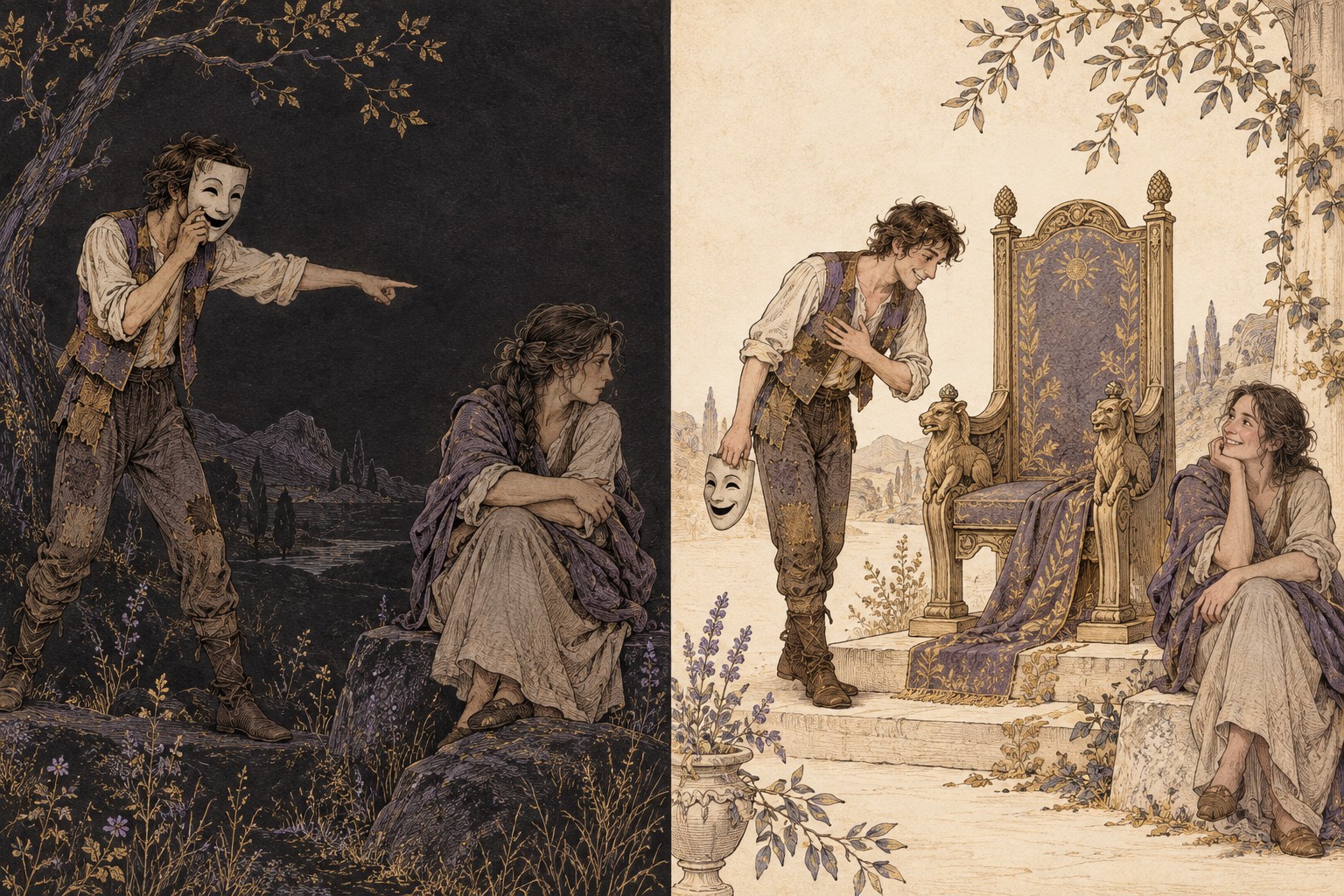
This is the laugh that disarms a tyrant, the sideways glance that topples certainty. Here, the Trickster is a sacred jester: one who unsettles illusion so deeper truths can rise.
It is disruption as revelation, not destruction.
Pattern
The Trickster often arrives when a room has gone rigid. Voices tighten. Everyone starts performing certainty. The spell has settled into the words and the air.
The Trickster asks, with warmth, “Can I offer a sideways mirror?” Then it offers a gentle joke that reveals the shared fear beneath the posturing, and the room exhales. The point is to loosen the spell so truth can be spoken without turning anyone into the joke.
Light
In light, the Trickster liberates perception. It sees the absurd and softens the room, releases tension through gentle laughter, asks the sideways question that unlocks what force could not, questions a stale convention to open a door, and punctures ego without humiliating the person carrying it.
Shadow
In shadow, the Trickster becomes manipulator, deceiver, or agent of chaos. Wit cuts instead of opening. “Just kidding” becomes a shield against impact. Mischief is used for sport. Meaning gets deconstructed and nothing is built in its place.
The fracture is clear: cleverness breaks contact rather than loosening the spell.
Gift
The Trickster’s gift is play that restores choice. Once cruelty, contempt, and evasion have been metabolized, wit no longer needs a victim or an escape route. It can reopen a relationship without pretending the rupture was harmless.
Reflection
When the Trickster rises, ask whether your humour connects or cuts, and whether you are provoking to reveal or to dodge responsibility.
The Fool
Archetype
After the Trickster breaks the spell, an interval opens before the next form appears. The old explanation has failed; the new one has not yet earned its name. The Fool enters there.
The Fool is the one who no longer needs knowledge to protect them from mystery.
The Child carries vulnerability, need, and recovered innocence within relationship. The Fool’s second innocence comes after knowledge: it has learned enough to know that no explanation exhausts the living world. It carries experience as guidance without turning it into a final account.
The Void points toward the formless ground; the Fool moves within lived uncertainty, choosing before the whole is known.
Where the Sage seeks coherence, the Fool preserves openness. Where the Trickster cracks a rigid frame, the Fool remains after the crack without rushing to install another throne.
Pattern
The Fool often arrives in the pause between event and conclusion. A silence, a changed expression, an unexpected refusal: the mind reaches for a story that will close the gap. The story may relieve the tension. Relief is not verification.
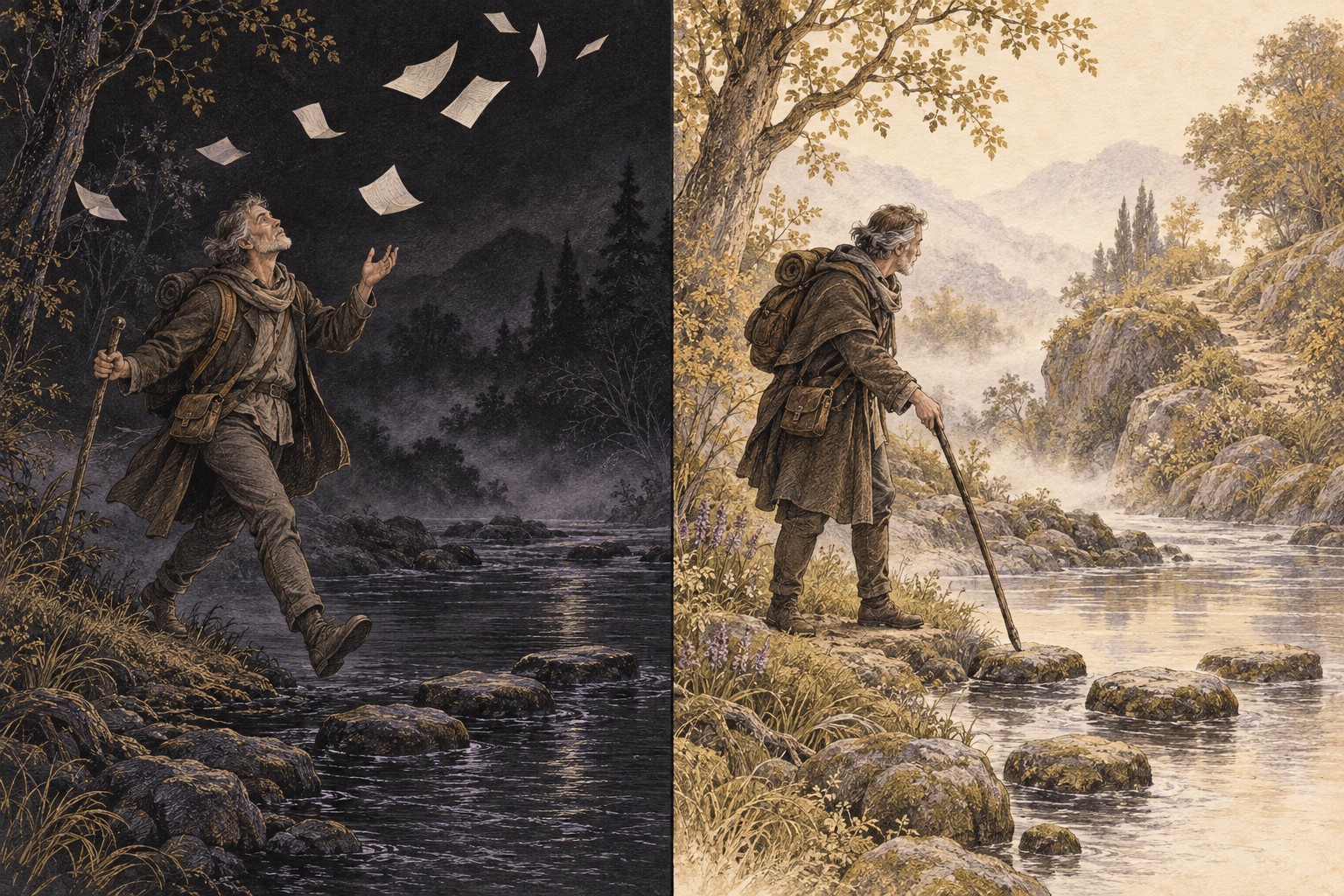
The Fool does not wait for complete certainty. It asks, listens, or takes the action the present evidence can support, then remains answerable to what returns.
Light
In light, the Fool can say I do not know without shame and I know enough without conquest. It lets reality revise the map and acts without claiming possession of another person, the future, or the mystery.
The healthy Fool’s curiosity has survived disillusionment. It remembers what experience taught, remains answerable to consequence, and still leaves room to be corrected. It is willing to look foolish in order to remain honest.
Shadow
In shadow, the Fool romanticizes ignorance, turns uncertainty into an escape from accountability, or treats chaos as freedom. It may hide behind self-deprecation or permanent joking so that no truth, promise, or intimacy can land.
The fracture is precise: openness stops serving encounter and starts protecting the self from commitment.
Gift
The Fool’s gift is freedom without possession. When compulsive closure loosens, surprise, correction, grief, and new form can enter.
I know enough to act. I do not know enough to possess.
The Fool keeps the Dragon open. The Dragon gives the Fool body, direction, and consequence.
Reflection
When the Fool rises, ask what you know directly, what you are inferring, what remains unknown, and what action is required now. Ask what feedback would change your reading. Then act without turning uncertainty into either excuse or throne.
The Magician
Archetype
The Dragon dreams with eyes open; the Magician awakens.
This is the still hand behind the ritual, the word that gives a shift form. The Magician transmutes: it joins intention to action, shaping reality through embodied spellwork that strengthens others’ agency rather than drawing them into its orbit.
A spell, in this sense, is a deliberate act of meaning: shaping attention, symbol, and habit so perception and behaviour can change through practice, not illusion.
Here, the Magician gives transformation a form that serves the soul.
Pattern
The Magician often arrives as pattern-sense before explanation. It notices hidden structure, senses how framing changes the field, and understands that timing, symbol, atmosphere, and method can shift what becomes possible.
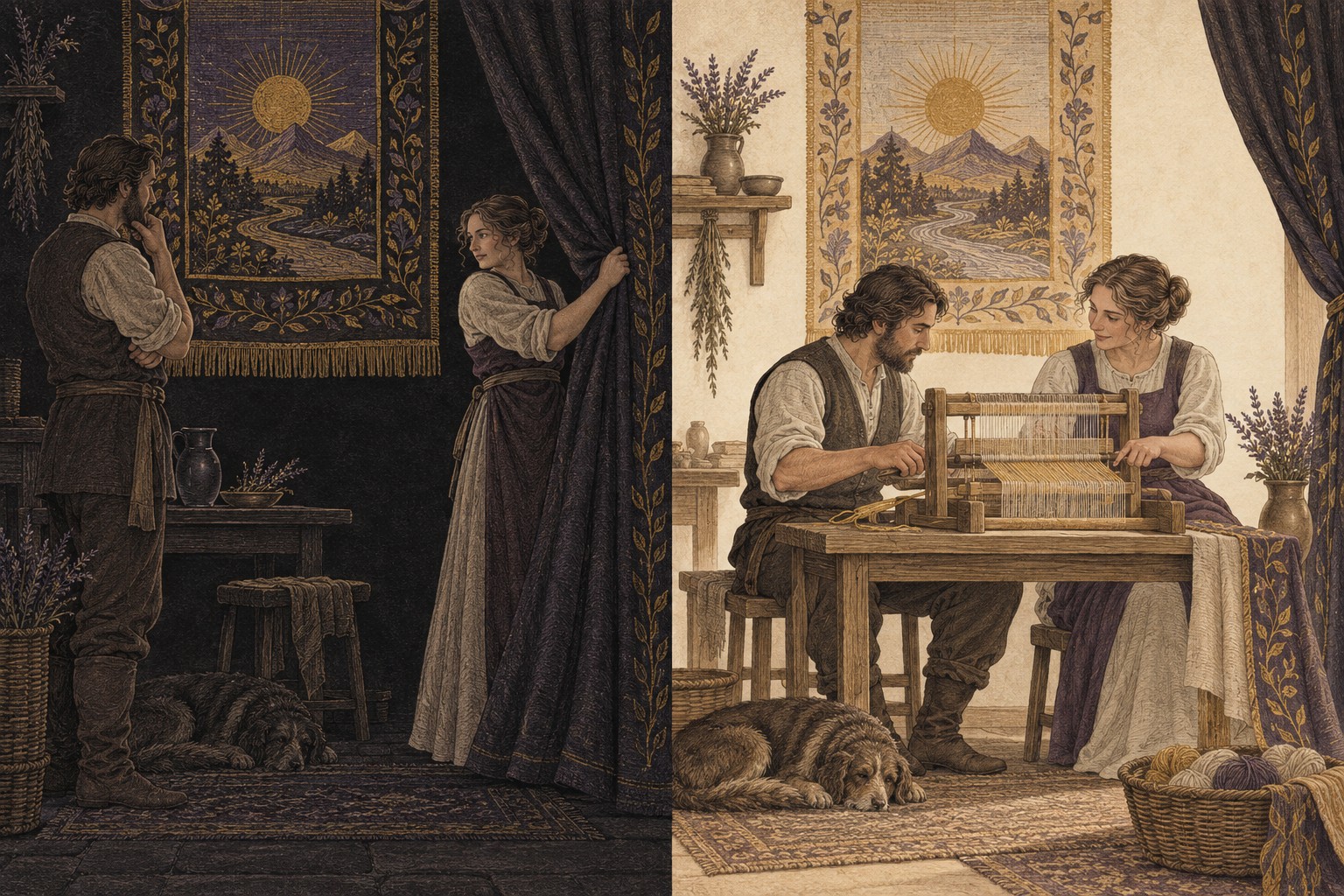
The Magician could impress with mystery, but instead it discloses the method: what is being done, why, and how to decline at any moment. It guides one simple act, with breath, symbol, and vow aligned, then asks each person to choose the next step for themselves rather than attributing the shift to “the energy.” Influence becomes craft. Autonomy stays intact.
Light
In light, the Magician makes transformation legible enough for consent. It can reframe a truth so people can see it, translate one world into another, and build forms where intention becomes embodied action. It can calm a room without coercion.
The healthy Magician works through form and meaning without demanding worship.
Shadow
In shadow, the Magician turns manipulator or illusionist. Affection gets used to bind. Mystery becomes glamour. Simple truths are obscured to keep others small. “Spirit” becomes a way to evade consent and accountability.
The corruption is precise: transformation becomes a private source of power rather than a shared increase in freedom.
Gift
The Magician’s gift is ethical alchemy. The Magician is judged by aftermath, not atmosphere. Do people leave clearer, freer, and more able to stand in their own agency?
The integrated Magician neither casts spells for show nor hoards the flame. It teaches method, returns power, and lets others wield their own fire, giving change time to take form.
Reflection
When the Magician rises, ask whether your intention is to create or control, whether you are fostering independence or dependence, and whether you are willing to answer for both direct and unforeseen impact.
When Archetypes Converge
Rarely do these forces move in isolation. A single act can carry several currents, each shaping the moment.
The same currents that shape one conversation or one vow also move through groups, institutions, and whole cultural turning points.
A physician blowing the whistle on unsafe hospital practices may feel the Warrior’s resolve to protect life, the Rebel’s defiance of corrupt authority, and the Sage’s commitment to truth, all at once.
A community organiser designing a street festival might weave the Magician’s imagination, the Healer’s fostering of connection, and the Trickster’s playful subversion of local politics into one event.
In either case, the Fool keeps the action revisable: movement does not require a pretence of certainty.
Integration means sensing which current should lead and which complementary current will keep it honest.
Forged Within, Wielded Without
How we embody these currents helps determine our own path, the rooms we steady, the harms we refuse, and the bonds we repair or leave.
Once these currents enter roles, rules, resources, and authority, they are amplified, redirected, or resisted. They shape how a household argues, a group handles truth, an institution uses power, and what an age begins to call normal.
Let the act reveal which current the moment required.