Part V
Chapter 24: Spectrum of Diverse Minds
Estimated reading time: 17 min
For many adults whose neurodivergence was recognized late, appearing to manage came at costs others rarely saw.
Minds can differ in the architecture of subjective experience: how thought arrives, how the body is felt, and how self and world become present. Similar outward lives can conceal profoundly different ways of being conscious.
Autism, ADHD, dyslexia, Tourette’s, AuDHD (co-occurring autism and ADHD), dyspraxia, dyscalculia, and other mixed profiles are forms of human neurological variation, not one deficit category. Each brings a different mix of capacities, disabilities, costs, and support needs; none should be reduced to a defect to erase.
Your wiring consists of neurological traits and thresholds: how your brain and nervous system tend to sense, filter, switch, recover, and connect. It is not the same as your wounding: psychological adaptations shaped by experience, trauma, and attachment. Wiring calls for understanding, accommodation, and support. Wounding may call for healing or integration practice; neither response should be forced into one compulsory outcome.
When these lenses blur, suffering multiplies. Confusing your wiring with your wounding breeds shame for neurological difference and directs effort toward appearing “normal” instead of reducing distress and expanding choice.
Diverse minds, when understood and supported, bring real strengths to personal and relational transformation.
They also meet specific barriers in transformational and other group settings built around a narrow nervous-system profile.
The task is to build a path this nervous system can actually enter: one that offers access and dignity without demanding disappearance as the price of belonging.
Neurodivergent Strengths and Costs
Neurodivergent people can carry remarkable capacities. These are not consolation prizes for deficits; when supported, they can become real resources on the Dragon’s Path.
Deep Focus & Hyperfocus
Often reported in ADHD and autistic experience, hyperfocus describes episodes of unusually intense absorption in a task.1
Researchers do not yet agree on a single definition or mechanism. Interest can help draw attention in, but it does not explain every episode.
When it lands on the work and the conditions support it, that absorption can deepen meditation, ritual, or the study of the Entangled Firmament.
Attention may stay with the work until attention and object seem to become one field.
Pattern Recognition & Systems Thinking
Especially strong in many autistic minds, this is the ability to perceive the architecture beneath the chaos.
In a circle, someone may notice that disagreements cluster around abrupt changes of plan, linking quarrels that had seemed unrelated.
Sensory Depth & Intensity
Common across many autistic and ADHD experiences, this can feel as if the volume, texture, and light of the world are turned up.
While sometimes overwhelming, heightened sensitivity can bring unusually fine-grained sensory detail into awareness.
For some, the world is not background; it is vivid, immediate, and alive. When support and regulation make that detail usable, it can support embodiment and offer one entry point for reflection across the Five Energetic Bodies. At other times, reducing input is what makes embodied contact possible.
Divergent Thinking & Creativity
Many ADHD and dyslexic thinkers make unexpected associations that open routes familiar methods overlook.
Someone borrows the structure of a song for reflection: a recurring line holds the question while each verse approaches it from another direction.
This nonlinear thinking can hold paradox and work creatively with the Creator–Destroyer current.
Authenticity & Justice Sensitivity
For many autistic and ADHD people, incongruence registers in the body before it becomes an argument.
This concern for fairness and authenticity can drive a deep commitment to shadow work and ethical engagement.
It can fuel the courage to challenge dogma within transformational and other group settings. With enough support and practice, it helps keep the path rooted in integrity, not performative spirituality.
Unique Intuitive Channels
Across neurotypes, this can feel like the pattern arriving before the explanation.
Thought may arrive through imagery, kinesthetic knowing, associative leaps, or direct pattern perception. Words can be the medium in which someone thinks, or a translation of an experience that first took another form.
These differences can make certain patterns easier to notice. Pattern sense belongs to no single neurotype and still needs testing through body, context, and consequence before it becomes guidance.
Difference on the Dragon’s Path
These are not differences to admire from afar. They tell you what kind of room, rhythm, and clarity this nervous system can actually use.
Recognizing these strengths changes the story: we stop trying to “fix” neurodivergence and start building around what it needs and offers.
Still, do not romanticize what it costs to move through a world not built for your wiring. The “extra” perception, patterning, or sensitivity often ride on the back of chronic over-effort: masking, translating, bracing. That load lands first in the Form Body—tension, fatigue, illness—and drains the energy needed for spiritual work.
Your divergence is not an error. In this path’s language, it can be understood as a Sacred Glitch—reclaimed language, not a diagnosis. Not because the pain is holy, but because the places where you cannot convincingly mimic “normal” can reveal where systems are too rigid, too narrow, or too costly to inhabit without self-erasure.
Those rupture points can become the Wound as Interface: openings through which novelty, insight, and living mystery enter rigid systems and invite them to evolve.
That breach does not automatically make perception truer. Support, steady company, context, and the body’s capacity to stay in contact without flooding matter to whether the opening yields insight or distortion.
Challenges and Sensory Landscapes
Alongside these strengths, neurodivergent people often meet specific barriers in transformative settings because these environments assume one nervous system as the norm:
Sensory Processing Differences
How the nervous system processes sensory input varies across neurotypes, creating different thresholds for contact, regulation, and participation:
Hypersensitivity. Environments with bright lights, loud sounds, strong smells, or excessive physical touch—common in retreats or group work—can overwhelm nervous systems that process stimuli with greater intensity or less filtering.
Overwhelm may trigger shutdown or meltdown responses, making breathwork, grounding, or group practice harder to sustain.
Hyposensitivity. Other nervous systems need more intense sensory input to feel grounded or engaged.
Subtle energy work or quiet meditation may feel inaccessible when input doesn’t meet the neurological threshold needed for registration.
Sensory seeking. Some nervous systems seek strong input (movement, pressure, texture, sound) to regulate or feel present. When supported intentionally—rather than treated as disruption—this can become a grounding resource.
Interoception challenges. Difficulty accurately perceiving internal bodily states (hunger, fatigue, emotion) can complicate embodiment, self-regulation, and the emotional awareness needed for shadow work.
Interoception challenges can occur alongside alexithymia, difficulty identifying and describing emotions. Time and concrete prompts can help someone explore what they feel without demanding an immediate emotional label.
Emotional Regulation
Neurodivergent people may experience emotions with greater intensity, faster escalation, slower settling, or a narrower gap between sensation and overwhelm.
A state can move from signal to flood before language, choice, or social explanation catches up.
Intense cathartic practices, like grief descent work or high-intensity Eros work, can destabilize the system without slower titration (small, manageable doses of activation), clearer opt-outs, and some form of co-regulation on the way back down.
Executive Function Differences
Executive function lives in the ordinary hinges of practice: beginning, sequencing, remembering the next step, sensing time, holding instructions, and shifting without losing the thread. These are real differences in brain functioning, not laziness in disguise.
They can make it difficult to:
- Follow complex ritual instructions
- Return to practice at a steady rhythm
- Land intense experiences without practical supports
The return afterward can become harder unless the practice is designed around capacity rather than increased willpower.
Social Interaction & Communication
Some people speak plainly. Some hear language literally. Some look away to listen better. Some read bodies slowly or send signals others misread. These differences arise from real neurological variation in how social information is tracked and interpreted.
At the same table, one person follows a voice while other sounds recede. Another struggles to keep that voice distinct as nearby conversations fill the foreground. The work begins in how the encounter takes shape, before deciding what anyone means.2
In a room, that can mean directness gets read as hostility, slower response gets mistaken for indifference, or eye contact norms start standing in for trust. Contact can fray when signals cross and no one names it. No one needs to be made wrong for that to matter; the crossing still needs naming, clearer agreements, or repair.
Need for Predictability & Structure
Some nervous systems genuinely thrive with clear structure, predictable routines, and explicit instructions.
Ambiguity or unexpected changes can throw the system into bracing, affecting participation in shifting group rhythms or open-ended contemplative work.
When the frame keeps shifting, attention can get pulled into bracing and decoding rather than insight, contact, or repair.
Written steps, advance notice, and named transitions can return enough predictability that attention no longer has to spend itself on bracing.
Understanding these challenges changes what a habitable path looks like: the room, the pace, and the level of ambiguity all matter.
Neuro-Affirming Practices
A habitable path begins before the exercise starts.
Those offering a practice should be clear about which needs the setting can meet. Naming a limit is more ethical than performing inclusion the room cannot actually hold.
Whether you practise alone or join a retreat, workshop, or festival, choose supports that lower friction and increase contact. Leave the rest.
Start With the Room
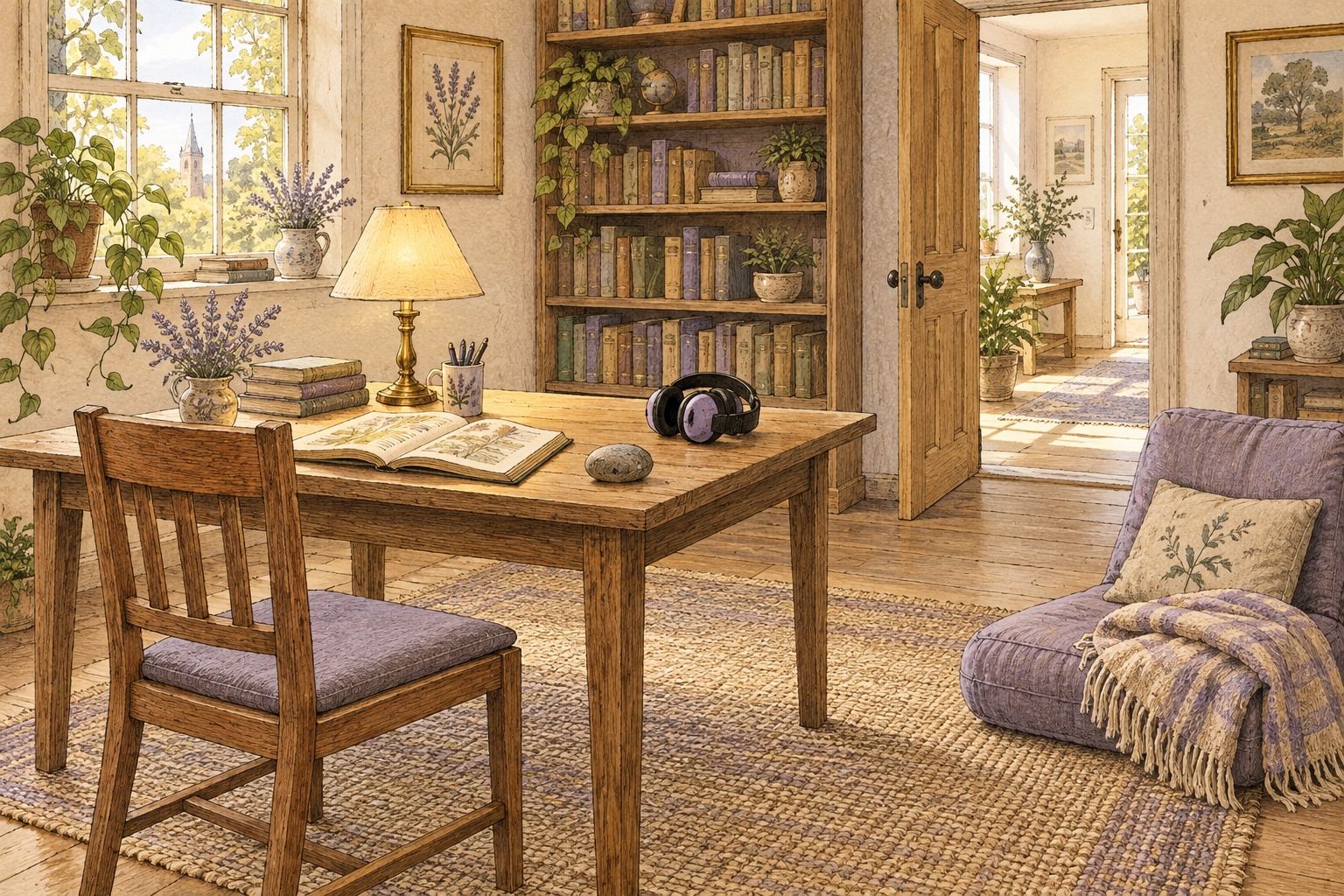
Quiet space, adjustable lighting, scent awareness, and clear exits can make participation possible. Advance notice of bright, loud, crowded, or tactile practices lets you choose what to enter and where to pause.
Some people with ADHD, and others who use movement to stay engaged, find prolonged enforced stillness especially difficult.3
Walking meditation, stretching, fidgeting, or brief strength work can make contact easier without fighting the body. A listening corner offers a quieter way to remain with the group.
Clarity, Pace, and Contact
For many nervous systems, clarity is part of regulation. Written steps alongside spoken instructions reduce the effort of remembering what comes next. When an instruction’s metaphor does not connect, tell the guide what you actually experience so they can adapt from that account.
Those guiding group work are responsible for stating boundaries and interaction norms aloud and in writing, and inviting explicit check-ins about needs and limits. Begin eye contact, touch, or another partnered step only after an explicit yes, communicated through speech, writing, or an agreed communication aid or signal. Honour a no immediately; never infer consent from ambiguous body language.
Good guidance keeps the frame visible and offers real choices about involvement, including alternatives when shadow work or high-intensity Eros work would otherwise overwhelm the system.
Ritual & Integration
After intensity, fewer voices, a familiar tactile anchor, or written landing cues can make the return more manageable. Keep the sequence clear even when the pace changes.
Repeated, supportive forms teach the system that intensity can have an ending, a landing, and a way back.
Visual art, movement, or structured journaling can offer different ways to make meaning afterward, without requiring an immediate spoken account.
For those shaping a group practice, the Checklists and Materials appendix includes “Neuro-Affirming Facilitation: The Practical Checklist.”
Late Diagnosis: A Life Reconsidered
You may have become the person others relied on while needing hours alone after an ordinary day. Competence was real. So was the effort no one counted.
A late diagnosis of autism, ADHD, or another neurodivergence can be a turning point in self-understanding. It gives neurological language to a lifetime of confusion.
What follows is less a new identity than a reinterpretation of a life already lived.
Recognition can also unsettle an old assumption: that everyone else’s mind worked much as yours did. Words such as focus or conversation may have concealed quite different experiences.
A person who spent decades being called lazy may discover that ADHD shaped when starting felt possible: urgency, novelty, or strong interest often helped, while ordinary tasks could remain hard to enter.
Behaviours once read as laziness, overreaction, failure, or lack of character begin to make sense as neurological traits and overload, not character defects.
Many discover they have been applying the Fundamental Attribution Error to themselves—mistaking biology for morality.
The effort of sustained masking becomes legible as exhaustion that can reduce capacity for the demanding work of the Spiral Path.
For many, this reinterpretation brings relief.
The same recognition also opens a door to complex grief.
This grief takes many forms:
- Mourning for the younger self who internalized messages of being “wrong” or “lazy.”
- Grieving lost opportunities or relationships damaged by misunderstood communication.
- Recognizing the immense energy spent trying to mimic neurotypicality.
This sorrow—along with any accompanying anger at systems that failed to provide support—can sharpen boundaries, clarify requests, and strengthen the drive to build more ethical and neuro-affirming spaces.
If grief rises, let it move at a pace you can hold. If you want a companion practice, the descent tools in Pearls in the Abyss can help carry it toward integration and authentic self-compassion.
Let this realization turn practical: seek neuro-affirming clinicians, facilitators, and peers who treat support as design rather than indulgence.
- A practice can be redesigned. Silent meditation can be adapted to how you attend, sense, and settle.
- Shadow work can become cleaner. With self-blame released, you can engage more compassionately with material first mapped at the Shadow Threshold. This includes the “Golden Shadow”—powerful neurodivergent strengths that may have been suppressed.
- Relationships can become more honest. Understanding your communication style and sensory needs allows for healthier requests, clearer boundaries, and more grounded repair.
Some describe this post-diagnosis period as a “second adolescence”—a liberating, if destabilizing, time of rediscovering identity and learning to live unmasked.
One week it can feel exhilarating. The next, brutally exposing.
The shift is profound: the path is no longer about fixing a flawed self, but about consciously forging a life that honours your neurological reality. That reframing takes courage. It rewrites a life’s narrative and lets your unique wiring become part of your expression of Dragon’s Fire.
Archetypes and Neurodivergence
Myth does not replace neurology here; it gives names and images to patterns already visible in attention, defence, creativity, and contact. Archetypes are living currents that different nervous systems express in different ways, not identities to assign.
For neurodivergent people, these forms often arrive through specific nervous-system realities: hyperfocus, sensory intensity, literal speech, pattern sight, friction with hostile norms, or nonlinear knowing.
Sustained attention can follow a structure or symbol through layers that a passing glance misses. Supported hyperfocus can give the Magician current this depth without leaving the body behind.
When the world is not built for your neurology, ordinary participation can require refusal: refusing hostile norms, false politeness, or self-erasure. The Rebel current takes form in that refusal, questioning harmful systems and demanding room for a life they exclude.
In some lives, this same Rebel current takes on an outsider’s vantage: less automatic participation in a norm can make its dominant pattern easier to notice.
The Sage need not arrive by a verbal argument. Visual thinking, synesthesia, and fine-tuned pattern recognition can offer an unexpected route to insight. The Sage tests what each of these currents reveals against context, consequence, and other perspectives.
You belong to the myth not despite your wiring, but through it.
The Dragon demands not sameness, but wholeness.
Masking, Burnout & Authentic Neurological Expression
Many neurodivergent people learn early to mask—suppressing natural behaviours, mimicking neurotypical cues, and forcing themselves into moulds that do not fit.
Masking often develops as a survival or translation strategy when an innate neurotype meets a world not built for it.
In practice, it can mean suppressing stimming, forcing eye contact, curbing info-dumping, or translating direct communication into more socially acceptable forms.
It may help someone gain acceptance, avoid judgement, or stay safe.
Masking and trauma-shaped armor can both be learned, and they can coexist. The distinction lies in function: masking alters the outward expression of wiring to navigate social conditions, while armor organizes protection around wounding and perceived threat. To understand an adaptation, look at how much choice remains, what the conditions demand, and what it costs.4
Outward presentation alone does not reveal which function an adaptation serves: someone may be masking, protecting a wound, or both.
Masking is a heavy tax. It demands immense moment-to-moment effort: constantly monitoring behaviour, translating interactions in real time, and suppressing authentic impulses.
Under sustained demand without enough accommodation or recovery, this effort can contribute to burnout: deep depletion when masking, sensory load, and chronic mismatch outrun capacity.5
Burnout changes the terms of the path.
When the nervous system spends most of its capacity on performance, less remains for presence. During burnout, intuition may become harder to read, embodied signals may become less distinct, and practice can turn brittle.
For some, spirituality first appears here as rescue: a promise that exhaustion can be transcended. If the path is approached as another performance demand, it simply turns burnout sacred and drives the tax deeper.
Unmasking and Reclaimed Capacity
The Path of the Dragon is built on radical authenticity, shadow integration, and embodied presence.
So it invites unmasking.
Unmasking is power conservation: reclaiming energy from performance and returning it to regulation, craft, and real contact. It is often gradual. In some environments, the mask is a safety device. Sovereignty means unmasking by degrees—and masking again when needed—without shame.
Presentation changes for many reasons, and adaptation can preserve authenticity. Nervous systems are contextual. Tone, pacing, eye contact, movement, and speech all change with load, trust, and environment. Authored adaptation flexes the form while keeping the same governing principles intact.
Seen this way, what many people call “personality” is often a long-running compromise between nervous-system needs and social legibility. The socially readable self is real, but it may be a filtered version built under pressure. Rather than hunting for an untouched self beneath the compromise, change reshapes conditions so capacities that were too expensive to show can finally come forward without punishment.
Inauthenticity does not begin when the form changes. It begins when the core is sold. Fear alone does not mark that line: masking can protect you in conditions you did not choose. The deeper cost appears when keeping the performance means treating your needs as illegitimate, your limits as irrelevant, or your convictions as disposable. The question is what the adaptation protects, what it costs, and what conditions would allow more choice.
Designing your habitat is not a luxury; it is how the nervous system keeps enough energy for the work. Unmasking can support deeper engagement with the path:
Let needs be facts: Honour neurological wiring as valid and vital. Needs are realities, not flaws.
Choose lower-cost environments: Prefer rooms that lower the masking tax. Recognize that masking drains the capacity needed for boundary-setting, repair, and transformation work.
Find neuro-affirming company: Seek spaces where the work of translation is shared—where diverse communication and sensory needs are normal—or where people can state honestly what they can and cannot hold. False inclusion is just another demand to mask.
Design conditions: Shape conditions your nervous system can actually live in—without apology or over-explaining.
Unmasking can involve vulnerability, experimentation, and confronting internalized ableism. It asks you to name needs plainly, without shame.
Honouring Diverse Minds
Neurodiversity is part of this path’s terrain.
Life-force moves through all minds, and Dragon’s Fire takes no single neurological shape. Sovereignty begins when you stop treating your nervous system as an inconvenience and start reading it as terrain.
Take one quiet minute. Name one way you pay the masking tax: sensory bracing, social translation, suppressing movement, forcing eye contact. Then grant yourself one support today—ear protection, movement breaks, shorter practice windows, dimmer light, direct communication. Tell one trusted person the simplest version of what helps, with no justification and no apology.
The Dragon does not ask for uniformity. It welcomes the particular ways your mind sparks and your body feels. Begin with one support you can make room for today.
Brandon K. Ashinoff and Ahmad Abu-Akel review the limited research and lack of a single consensus definition in Hyperfocus: the forgotten frontier of attention, Psychological Research 85 (2021).↩︎
Sofie Boldsen’s qualitative study examines how sensory surroundings can move into the foreground of autistic social experience, making participation depend on deliberate efforts to find perceptual and social meaning. See Autism and the Sensory Disruption of Social Experience, Frontiers in Psychology 13 (2022).↩︎
The National Institute of Mental Health includes restlessness, difficulty sitting still for long periods, and frequent movement or fidgeting among possible adult ADHD symptoms; these do not occur in every presentation. See ADHD in Adults: 4 Things to Know.↩︎
Valeria Khudiakova et al. describe autistic camouflaging as context-dependent impression management: often compelled by stigma and linked in lived experience to harm, yet sometimes used to secure safety, work, or relationship. Quantitative research has not established one uniform effect. See What We Know and Do Not Know About Camouflaging, Impression Management, and Mental Health and Wellbeing in Autistic People, Autism Research 18 (2025).↩︎
Research is most developed for autistic burnout. A 2025 systematic review identified sensory and social overwhelm, camouflaging, stigma, everyday demands, and insufficient support among reported contributors, while noting that its samples were not representative of all autistic people. See Dorota Ali et al., Burnout as Experienced by Autistic People: A Systematic Review, Clinical Psychology Review 122 (2025).↩︎